
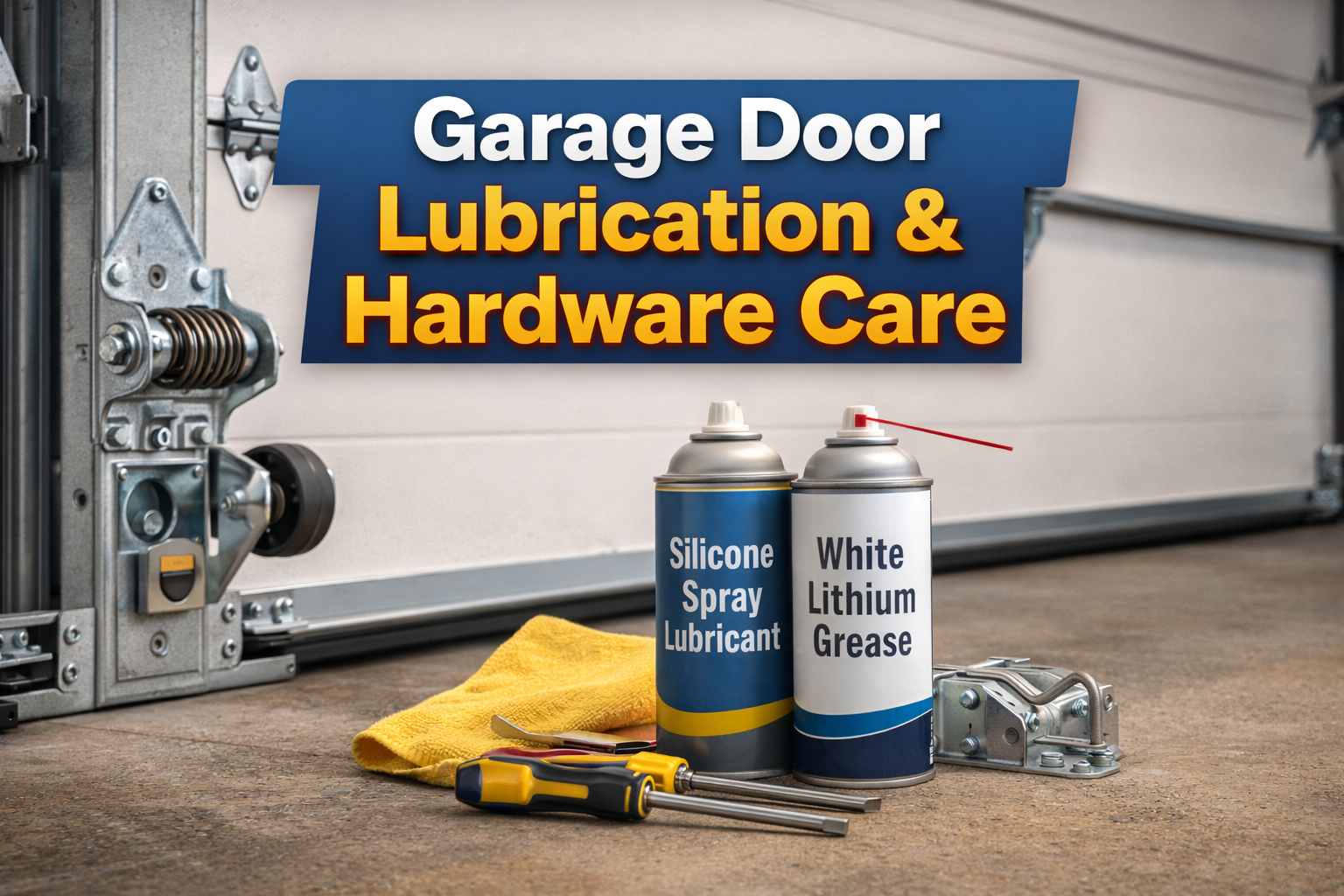
Garage Door Lubrication and Hardware Care: What Most Homeowners Overlook
Garage doors don’t usually get much attention—until they start making noise.
A sudden squeak, a grinding sound, or a door that feels heavier than it used to are often the first signs that something needs attention. The truth is, garage doors work incredibly hard. They open and close multiple times a day, carry significant weight, and rely on a network of moving parts that most homeowners never see.
The good news? A simple lubrication and hardware care routine can prevent many of the problems that eventually lead to expensive repairs.
Let’s walk through what actually needs attention, what to avoid, and how to keep your garage door operating smoothly and safely.
Why Lubrication Makes Such a Difference
Your garage door isn’t just one large panel—it’s a coordinated system of rollers, hinges, springs, bearings, and tracks. Every time the door moves, these components create friction.
When friction builds up, you may notice:
-
Increased noise
-
Slower operation
-
Uneven movement
-
Extra strain on the opener
-
Visible wear on metal parts
Over time, that wear turns into breakdowns.
Lubrication isn’t just about quieting noise—it reduces stress on the entire system.
The Most Common Mistake: Using the Wrong Product
One of the biggest mistakes I see homeowners make is reaching for whatever spray lubricant happens to be in the garage.
WD-40 is often the first choice. While it can temporarily loosen stuck parts, it isn’t designed as a long-term lubricant. It can attract dust and grime, and in some cases, make buildup worse over time.
Other products to avoid include:
-
Thick, sticky grease on tracks
-
Household oils that break down quickly
-
Over-application of any lubricant
More product doesn’t equal better performance.
What You Should Use Instead
For most garage door systems, a silicone-based spray or a garage door–specific lubricant works best. In certain areas, white lithium grease can be appropriate for metal-to-metal contact points.
The key is choosing something that:
-
Reduces friction
-
Resists moisture
-
Doesn’t attract excessive debris
Always check the manufacturer’s recommendations if you’re unsure.
Step-by-Step: How I Recommend Lubricating a Garage Door
Before doing any maintenance, disconnect the automatic opener and ensure the door is fully closed.
Step 1: Clean Before You Lubricate
Lubrication works best on clean hardware.
Take a few minutes to:
-
Wipe down hinges
-
Remove debris from rollers
-
Clear dirt from tracks
-
Inspect for rust or corrosion
Applying lubricant over grime simply traps debris.
Step 2: Focus on the Rollers
If your garage door has metal rollers, apply a small amount of lubricant to the bearing area inside the wheel.
Avoid soaking the entire roller. If you have nylon rollers, lubricate only the metal bearing—not the nylon surface itself.
If rollers appear cracked or severely worn, lubrication won’t solve the problem. Replacement may be necessary.
Step 3: Lubricate Hinges and Pivot Points
Hinges flex every time the door moves. A light application at the pivot points reduces stress and prevents squeaking.
Wipe away excess spray so it doesn’t drip or collect dust.
Step 4: Lightly Coat the Springs
Garage door springs are under significant tension, so safety matters here.
Apply a light coat of lubricant to the springs to reduce corrosion and friction—but never attempt to adjust or replace springs yourself unless properly trained.
If something looks damaged or uneven, it’s best to call a professional.
Step 5: Check Bearings and Pulleys
If accessible, lightly lubricate:
-
End bearings
-
Center bearing plate
-
Pulleys (for extension spring systems)
This helps prevent grinding sounds and uneven wear.
Step 6: Opener Maintenance
If your opener uses a chain drive, apply a small amount of chain lubricant. Screw-drive openers may require manufacturer-approved grease.
Avoid lubricating tracks. Tracks should be clean and dry—not greasy.
Hardware Care Is Just as Important
Lubrication is only part of the picture.
While inspecting your door, also check for:
-
Loose bolts
-
Misaligned tracks
-
Rust spots
-
Cracked hinges
-
Fraying cables
Tighten hardware carefully, but don’t overtighten. And if you notice damage to cables or springs, leave that repair to a professional.
How Often Should You Do This?
For most homes, twice a year is sufficient.
If you live in a humid or coastal area, you may want to inspect every three to four months. Moisture accelerates corrosion and hardware wear.
If your garage door starts sounding different, that’s usually your cue to take a closer look.
When Lubrication Isn’t Enough
Sometimes lubrication won’t fix the issue.
If you notice:
-
The door jerking or falling unevenly
-
Loud snapping or banging sounds
-
The opener struggling
-
Springs that appear stretched or broken
It’s time to call a professional. Garage doors can be dangerous to repair without proper tools and training.
Final Thoughts
Garage doors rarely fail overnight. Most problems build gradually through friction, corrosion, and small hardware issues that go unnoticed.
A simple lubrication routine and occasional hardware inspection can dramatically extend the life of your door—and keep it operating quietly and reliably.
It’s one of those small maintenance tasks that takes less than an hour but can save you from a much bigger headache down the road.