
Why Your Home Still Feels Drafty (Even After You “Fixed” the Windows)
If you’ve ever replaced weatherstripping, sealed a few gaps, or even upgraded your windows—yet your home still feels drafty—you’re not alone.
Many homeowners assume that drafts only come from old windows. In reality, air movement inside a home is more complicated. Insulation gaps, pressure differences, poorly sealed transitions, and overlooked spaces often allow air to travel where it shouldn’t.
If your house feels colder than it should in winter or harder to cool in summer, the issue may not be the windows at all.
Let’s break down what’s really happening—and what you can do about it.
Drafts Aren’t Always About Windows
Windows are an easy target. They’re visible, they have moving parts, and they’re often blamed first.
But air leakage typically comes from:
-
Gaps around framing
-
Poor insulation behind drywall
-
Attic bypasses
-
Unsealed utility penetrations
-
Garage-to-house air transfer
-
Worn door seals
-
Electrical outlet gaps on exterior walls
Even newer homes can have significant air leakage if insulation wasn’t installed carefully.
Replacing windows without addressing these areas often leads to disappointment.
The Stack Effect: Why Air Moves Inside Your Home
One of the biggest reasons homes feel drafty is something called the stack effect.
Here’s the simple version:
-
Warm air rises.
-
As it rises and escapes through the attic, it pulls cold air in from lower areas of the home.
-
This creates continuous airflow from bottom to top.
So even if your windows are sealed, air may still be entering from:
-
The garage
-
Crawlspaces
-
Basement rim joists
-
Gaps around plumbing lines
If the attic isn’t sealed properly, your home essentially becomes a chimney.
Insulation vs. Air Sealing: They’re Not the Same Thing
This is one of the most misunderstood areas of home efficiency.
Insulation slows heat transfer.
Air sealing stops airflow.
You can have thick insulation in your attic, but if there are gaps around:
-
Recessed lighting
-
Wiring penetrations
-
Duct chases
-
Attic access doors
…air will still move freely.
Before adding more insulation, air sealing should always come first.
Common Areas Where Energy Loss Happens
If your home feels uncomfortable, check these areas:
1️⃣ Attic Access Hatch
This is often poorly sealed and insulated. A thin plywood panel does very little to prevent heat loss.
2️⃣ Door Thresholds
Entry doors and garage entry doors frequently have worn bottom seals.
3️⃣ Garage-to-Home Walls
If your garage isn’t insulated properly, temperature transfer into adjacent rooms is common.
4️⃣ Window Trim Gaps
Even if windows are new, small gaps behind trim can allow airflow.
5️⃣ Electrical Outlets on Exterior Walls
These are surprisingly common sources of air leakage.
Signs Your Insulation Isn’t Performing Well
You might notice:
-
Uneven room temperatures
-
Higher energy bills
-
Cold floors in winter
-
Hot upstairs rooms in summer
-
Condensation near windows
-
HVAC systems running constantly
These symptoms usually indicate a combination of air leakage and insufficient insulation.
Simple Fixes That Make a Big Difference
You don’t always need a full insulation overhaul.
Here are practical improvements homeowners can start with:
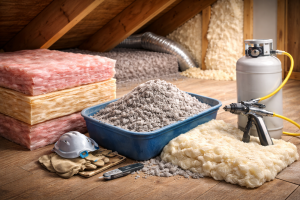
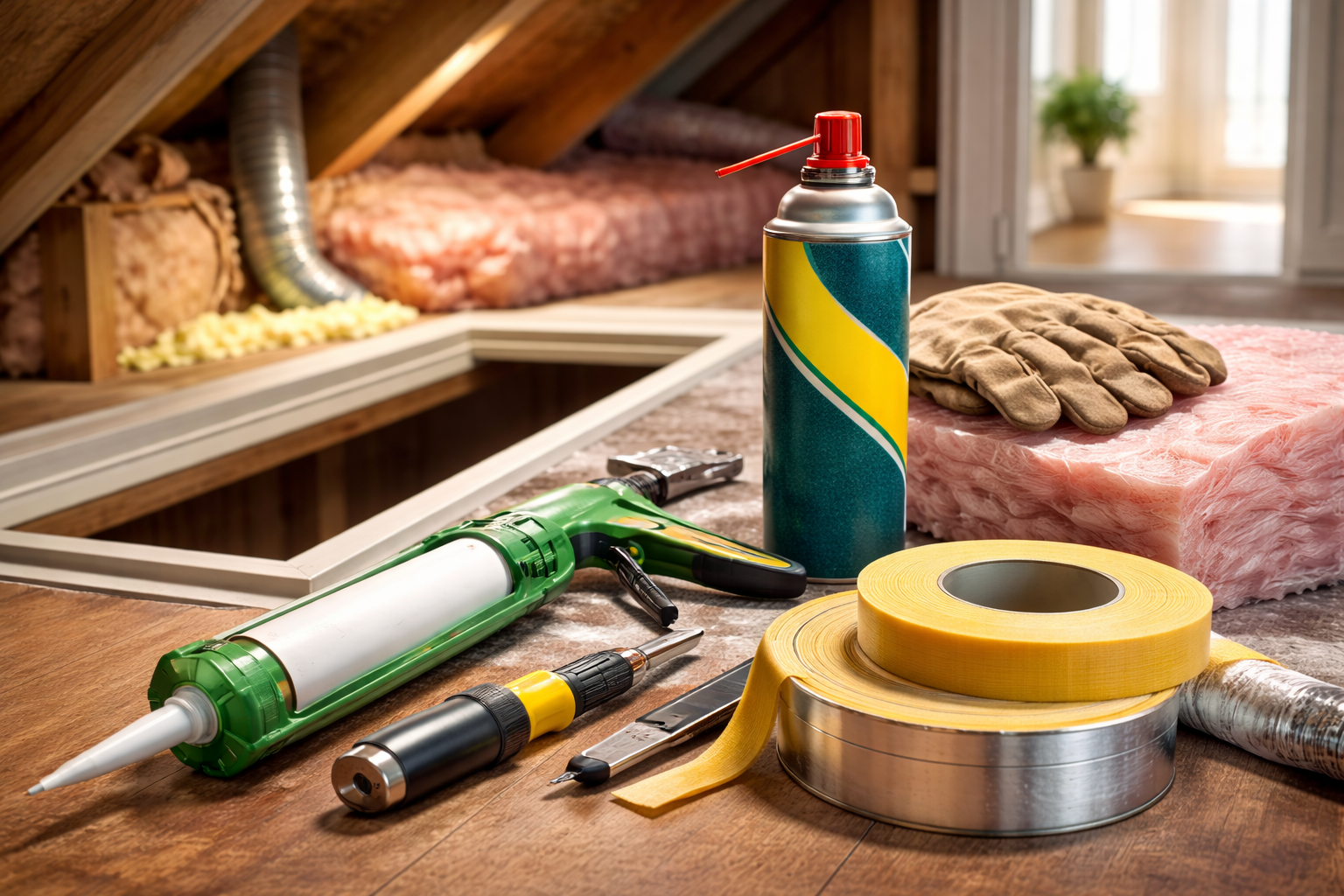
Seal Attic Penetrations
Use foam or caulk around:
-
Plumbing vents
-
Wiring holes
-
Light fixtures (rated appropriately)
Upgrade Door Weatherstripping
Replace brittle or compressed seals around:
-
Exterior doors
-
Garage entry doors
Add Insulation to Attic Hatches
Attach rigid foam board to the back of the hatch and add weatherstripping around the frame.
Seal Rim Joists
In basements or crawlspaces, sealing rim joists can reduce cold air intrusion significantly.
Address Garage Insulation
If you have an attached garage, consider insulating:
-
Garage door panels
-
Shared interior walls
-
Ceiling below living spaces
When Window Replacement Is Actually Necessary
While windows aren’t always the main culprit, sometimes they are.
Replacement may make sense if:
-
Seals have failed and glass is fogging
-
Frames are rotted or warped
-
You feel strong air movement around closed sashes
-
The windows are single-pane and inefficient
But if your windows are relatively modern and intact, focus on air sealing first.
The Energy Bill Reality Check
One of the most frustrating situations for homeowners is investing in upgrades without seeing noticeable energy savings.
That often happens when:
-
Insulation is added without sealing leaks
-
Only one area of the home is improved
-
Air pathways remain open elsewhere
Energy efficiency works best when approached as a system—not a single fix.
A Balanced Approach to Comfort
Improving insulation and energy efficiency isn’t about chasing perfection. It’s about reducing obvious leaks, improving comfort, and protecting your home from long-term moisture issues.
Better insulation and air sealing can:
-
Reduce HVAC strain
-
Lower utility bills
-
Minimize condensation
-
Improve indoor comfort
-
Protect framing from moisture damage
Even modest improvements add up over time.
Final Thoughts
If your home still feels drafty after addressing your windows, don’t assume you’ve wasted your effort. Air movement inside homes is often more complex than it appears.
Start by identifying where air enters and exits. Seal obvious gaps. Improve attic insulation and garage barriers. Think in terms of airflow patterns—not just individual components.
Small, thoughtful improvements can make your home noticeably more comfortable—and far more efficient.